She Never Should Have Been Shot.
Maleficent’s story did not begin with rescue. It began with a human shooting her.
Not bad luck. Not a tragic accident. A person made a choice. Someone pulled a trigger, and Maleficent’s body paid for it. She never should have been shot. Everything that happened after that — every surgery, every complication, every impossible decision — exists because a human chose violence.
The bullet destroyed her front leg. It had to be amputated. She was spayed. She was pushed through surgery, recovery, handling, and transport — forced to endure stress and pain layered on top of trauma that never should have existed in the first place.
When Maleficent arrived in Minnesota, it was immediately clear something was wrong.
She couldn’t keep food down.
She couldn’t keep water down.
Imaging suggested a blockage. More tests followed. More waiting. More time spent hoping for a simple explanation. After days of observation, the reality surfaced.
Megaesophagus.
A diagnosis that is difficult — but manageable.
Then her back leg began to swell.
More x-rays. More observation. And then the discovery that shattered any remaining illusion of hope.
Another bullet.
Another gunshot injury so severe her foot was nearly detached. She had been living with it. Walking on it. Existing in constant pain. The damage was catastrophic. And it was on the same side of her body as her missing front leg.
She lost a leg.
She endured surgery.
She survived transport.
All while yet another devastating medical issue went unnoticed.
This is where rescue collides with reality.
Where emotion meets limits. Where what is technically possible is not always what is humane, sustainable, or responsible. Rescue does not operate in a world of unlimited money, unlimited space, unlimited fosters, or perfect adopters waiting for every medically complex dog. It operates in the real world — a world of finite resources and constant triage.
Yes, there are conditions that can be managed.
But management is not the same as quality of life. Survival is not the same as relief from suffering. Wanting a different outcome does not make one exist.
Maleficent’s medical realities were technically survivable. Together, they created a level of lifelong care that would require an extraordinary placement — one that rarely exists. The type of commitment that cannot be assumed. The type of burden that, if placed incorrectly, would simply transfer suffering instead of relieving it.
Finding an adopter capable of managing that reality would have been like finding a needle in a haystack.
And rescue must face another truth few people ever consider.
Every foster home is a resource.
Every placement decision closes one door while opening another.
Her foster choosing to adopt her would not have been a simple happy ending. It would have meant removing a foster home from the pipeline entirely. Fewer dogs helped. Fewer emergencies answered. Fewer lives saved.
This is the math rescue is forced to confront every day.
Not because dogs are disposable. But because resources are not infinite.
These are the parts of rescue people rarely want to acknowledge.
Not just whether a dog can survive — but whether the life ahead of them is humane, sustainable, and fair.
And despite everything — despite the bullets, the pain, the broken body — Maleficent was extraordinary.
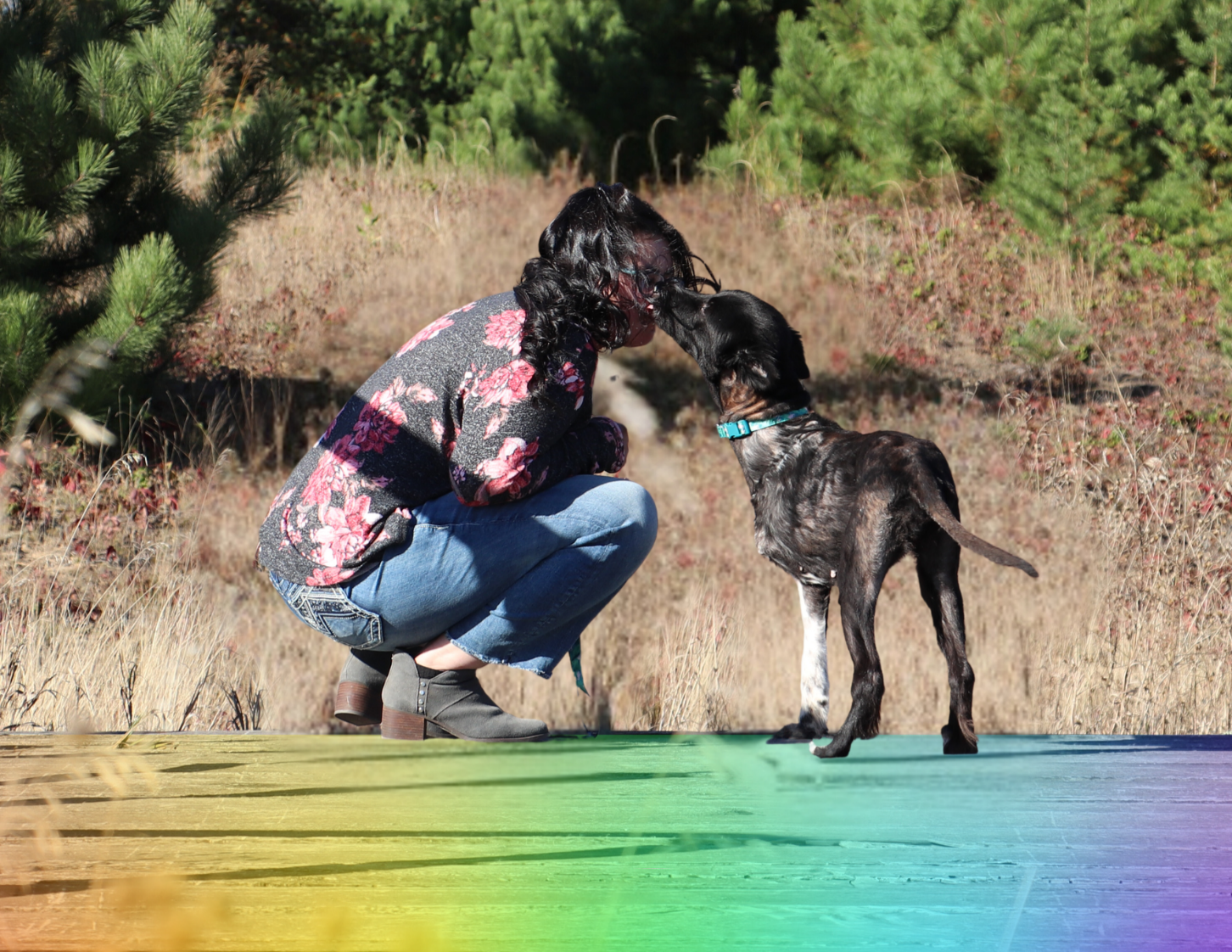
She was gentle. Soft. Affectionate. She adored her foster mom. She trusted us. She leaned into human touch without hesitation. No bitterness. No fear-driven aggression. No withdrawal.
No matter how much pain she carried, she loved anyway.
She loved us anyway.
We knew quickly there was no humane future once the full medical picture became clear. But Maleficent’s foster mom — carrying the heaviest burden imaginable — asked for one simple thing:
“Please give me one week to show her what love is like.”
One week.
Not denial. Not false hope. Just compassion.
And that week mattered.
I will always respect Maleficent’s foster mom for that decision.
She chose what was right for Maleficent, not what was easiest for herself. She chose to carry the grief so Maleficent would never have to carry another day of pain. That kind of choice is brutal. It is not abstract. It is not clinical. It is sitting with a dog you love, knowing there is no outcome that doesn’t break your heart, and still choosing the one that spares them further suffering.
It is love without denial.
Compassion without selfishness.
Devotion without looking away from reality.
Many people imagine rescue as saving at all costs. Fighting no matter what. But there are moments when fighting is not kindness, and holding on is not mercy. Her foster mom understood that. She absorbed the pain of goodbye so Maleficent would never have to endure another day inside a body that hurt.
That is not giving up. That is protecting.
That is the hardest form of love rescue will ever ask of someone.
Maleficent deserved a life where rescue was never needed.
She deserved a world where no one ever pulled a trigger.
But she was known.
She was held.
She was loved.
And even after everything —
She loved us anyway.